
Residential Societies Must Stop Cutting Corners on Access Control
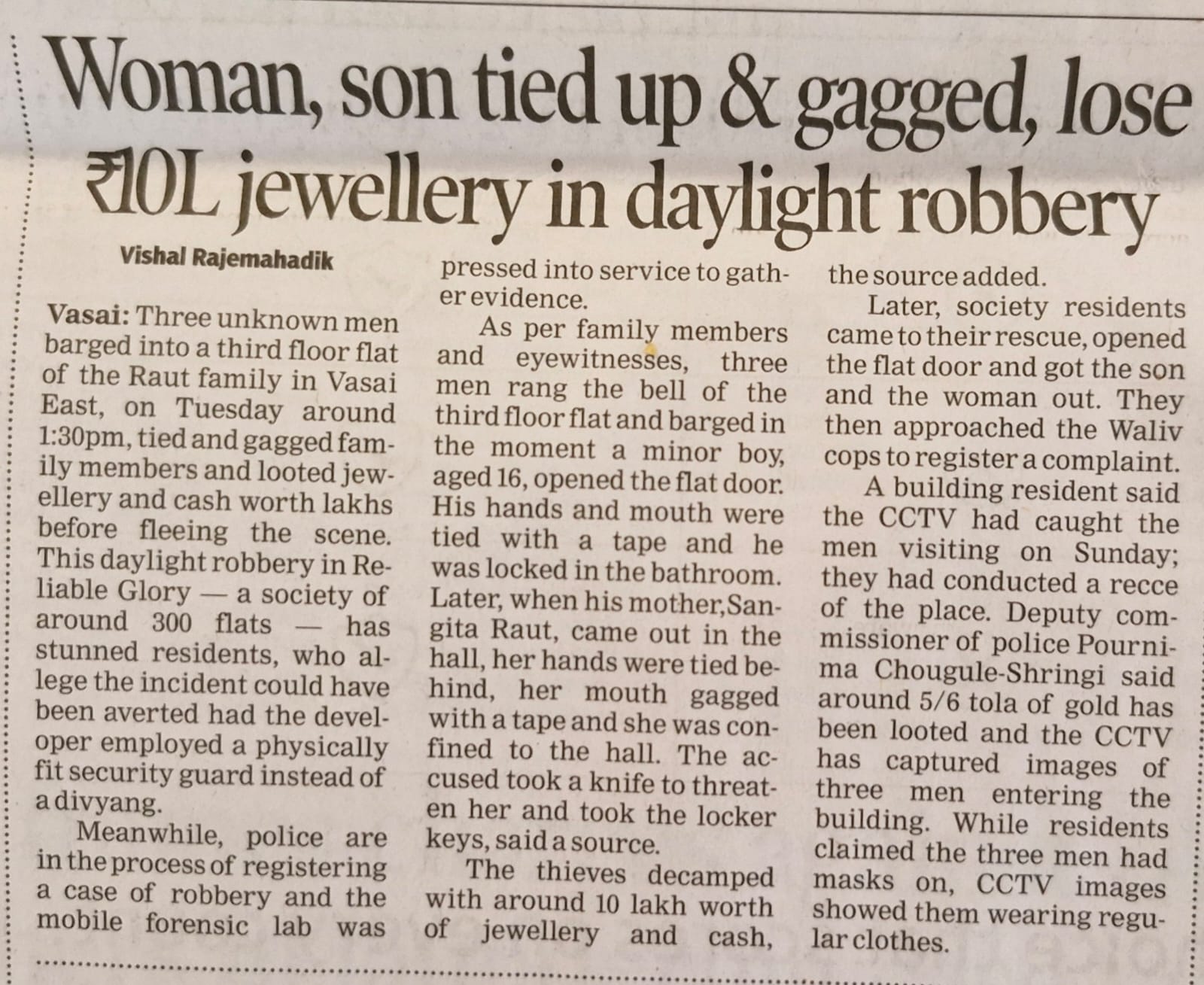
The recent daylight robbery in Vasai, reported in the Times of India, is another reminder that many residential societies still believe that basic security—one guard at the gate and a few CCTV cameras—is enough to keep residents safe. Unfortunately, modern criminals are smarter, more organised, and fully aware of the loopholes created by cost-cutting.
In this incident, the attackers simply rang the doorbell, entered the building, tied up the occupants, and looted valuables worth ₹10 lakh. CCTV later revealed that the robbers had even visited earlier—yet nothing stopped them from walking in again.
The Core Issue: No Real Access Control
Most societies today still rely on verbal confirmations and manual visitor registers. Without structured access control, anyone who can talk their way past a guard gains full access to the building.
A modern residential building must enforce:
- Verified screening at the main lobby
- Controlled admission instead of just opening the door on request
- Video Door Phones or IP intercoms at the lobby to confirm visitors visually
Screening Must Happen at Each Floor Too
Many robberies take place after criminals reach the upper floors unnoticed. Installing floor-level video door phones allows residents to verify visitors again before opening their doors—adding a second layer of protection where it matters most.
CCTV Must Be Working—Not Just Installed
In far too many buildings:
- Cameras are out of focus
- Storage is full
- DVRs are not monitored
- Footage is overwritten too soon
A simple maintenance plan or remote monitoring dashboard can ensure cameras are:
- Recording
- Accessible
- Functioning as intended
Guard Monitoring Systems Improve Accountability
Guards do their best—but without tracking systems, there is no proof of:
- Patrolling frequency
- Lobby presence
- Response time
A guard monitoring system makes security measurable.
Time to Review, Not React
Buildings don’t have to spend a fortune—just invest wisely and professionally. Regardless of which consultant they work with, societies should periodically audit their systems and close the gaps before another headline appears.