
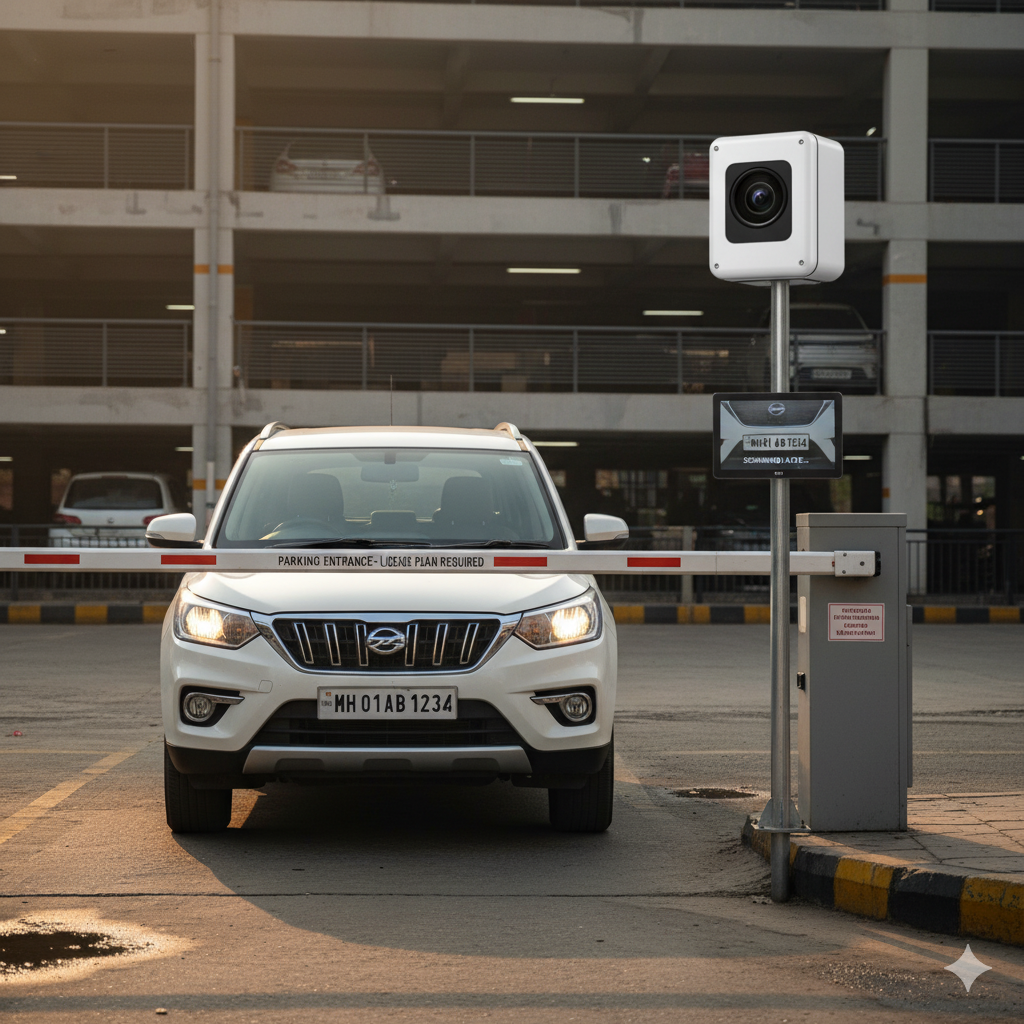
In a dense metropolitan environment like Mumbai, where the twin demands of high-security and fluid access are non-negotiable for residential and commercial complexes, relying on outdated access technology creates a significant risk. As industry experts and specialized consultants, we view the transition from legacy Radio Frequency Identification (RFID) systems to Automatic Number Plate Recognition (ANPR) as a necessary technological evolution, not merely an upgrade.
The core weakness of traditional RFID systems lies in their dependency on a physical credential—the tag or sticker. This tangible item is susceptible to several security failures: it can be easily damaged or degraded by harsh weather, such as the intense humidity or pphysical damage while cleaning, leading to read failures and frustrating congestion.
More critically, an RFID tag is transferable. A lost, stolen, or intentionally loaned tag allows an unauthorized vehicle to gain access, completely undermining the security perimeter. Furthermore, the administrative and financial burden of constantly issuing, replacing, and managing these physical credentials adds complexity and recurring costs.
ANPR, however, offers a fundamentally superior and more robust solution. By utilizing high-definition cameras and sophisticated AI-powered Optical Character Recognition (OCR), ANPR reads and verifies the vehicle’s unique, legally registered number plate in real-time. This method intrinsically links access to the vehicle itself, a non-transferable identifier, which drastically minimizes the risk of fraudulent entry. It ensures that only pre-registered vehicles—and by extension, their authorized users—are permitted access.
Moreover, modern ANPR systems are engineered for resilience. Advanced machine learning algorithms allow them to maintain high-accuracy recognition despite challenging factors prevalent in urban settings, including diverse number plate standards, low-light conditions, or the dirt and glare often found on vehicle surfaces. It is a completely non-intrusive solution, requiring no physical action from the driver or any external hardware on the vehicle.
Integrating ANPR provides security management with an invaluable, time-stamped visual audit trail of all vehicular movement, significantly bolstering
investigative capabilities and site accountability.
For any modern property seeking a truly secure, efficient, and long-term vehicle access solution, ANPR technology provides the strategic advantage.